
Cloud: Difference between revisions
m 1 revision imported: From the summer |
m 1 revision imported |
||
| (One intermediate revision by one other user not shown) | |||
| Line 1: | Line 1: | ||
[[Category:Done | [[Category:Done 2026-07-01]] | ||
<onlyinclude>'''Clouds''' are made primarily of [[water]] droplets and ice crystals floating in the sky. They play an important part in the Earth's [[weather]] | <onlyinclude>'''Clouds''' are made primarily of [[water]] droplets and ice crystals floating in the sky. They play an important part in the Earth's [[weather]]: they influence and are affected by the Earth's [[climate]]</onlyinclude> (see [[climate vs weather]] explaining the difference).<Ref name=nasa1>NASA. (Accessed May 16, 2016). ''What Are Clouds?'' [Online], Available: http://www.nasa.gov/audience/forstudents/k-4/stories/nasa-knows/what-are-clouds-k4.html</ref> | ||
Clouds play a very complicated role in the Earth's [[climate system]]:<ref name=nasa2>ISCCP. (Accessed May 16, 2016). ''Cloud Climatology'' [Online], Available: http://isccp.giss.nasa.gov/role.html</ref> | Clouds play a very complicated role in the Earth's [[climate system]]:<ref name=nasa2>ISCCP. (Accessed May 16, 2016). ''Cloud Climatology'' [Online], Available: http://isccp.giss.nasa.gov/role.html</ref> | ||
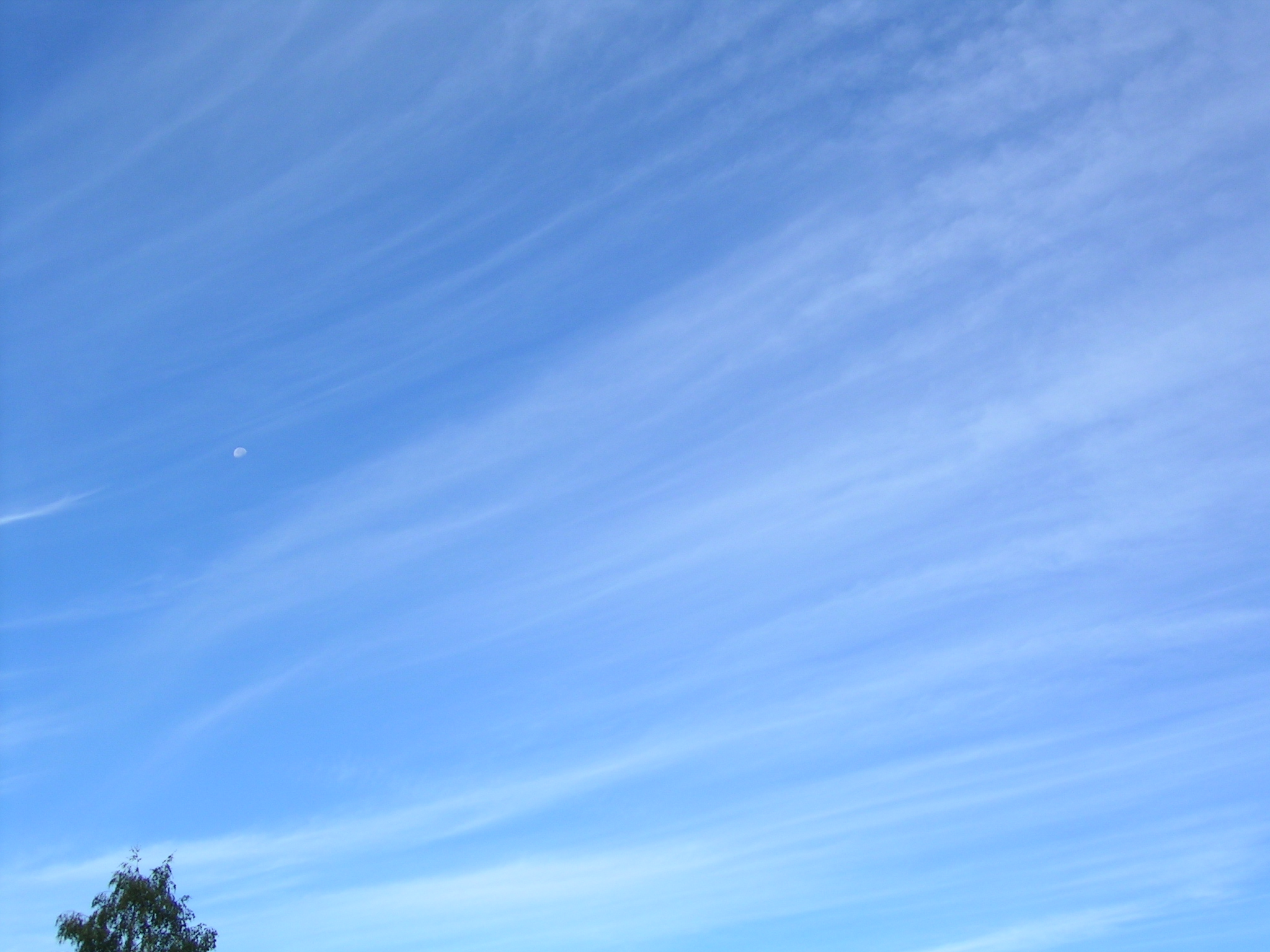
*Higher clouds absorb and re-emit light from the Earth, in effect '''heating''' the surface ( | *Higher clouds absorb and re-emit light from the Earth, in effect '''heating''' the surface (seen in Figure 1) | ||
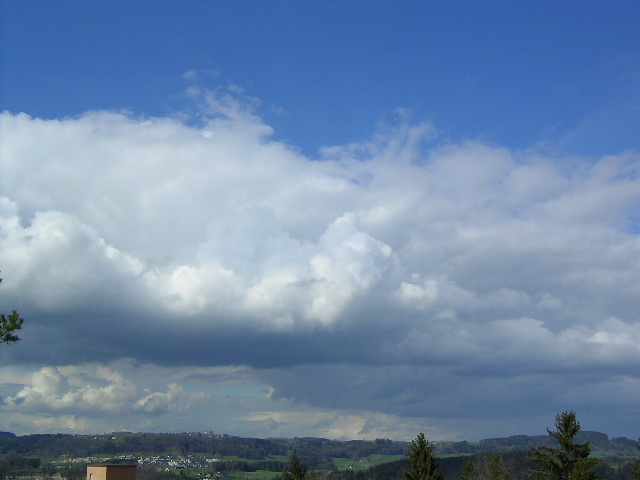
*Low clouds reflect incoming [[sunlight]], in effect '''cooling''' the surface ( | *Low clouds reflect incoming [[sunlight]], in effect '''cooling''' the surface (seen in Figure 2) | ||
*Clouds warm and dry the [[atmosphere]] and supply water to the surface through [[precipitation]] | *Clouds warm and dry the [[atmosphere]] and supply water to the surface through [[precipitation]] | ||
*Clouds are themselves created by warming and cooling in the atmosphere | *Clouds are themselves created by warming and cooling in the atmosphere | ||
| Line 23: | Line 23: | ||
[[Earth's heat balance]] is influenced by clouds, as they typically increase the [[albedo]] of the Earth when they are present. Albedo represents the fraction of incoming sunlight that the Earth reflects. | [[Earth's heat balance]] is influenced by clouds, as they typically increase the [[albedo]] of the Earth when they are present. Albedo represents the fraction of incoming sunlight that the Earth reflects. | ||
A cloud's high albedo introduces a [[negative feedback]] to the Earth's climate. As the Earth warms | A cloud's high albedo introduces a [[negative feedback]] to the Earth's climate. As the Earth warms it reduces the effects of the initial heating. Upon heating, more water [[evaporation|evaporates]], resulting in greater cloud formation, which increases the total albedo of the Earth and reduces the amount of incoming sunlight that gets to the Earth's surface.<ref>Southwest Climate Change Network. (October 10, 2015). ''Negative Feedback Cycle'' [Online]. Available: http://www.southwestclimatechange.org/figures/feedback_cycles</ref> This cycle plays a large role in maintaining the stable [[temperature]]s of the Earth, much like the human body sweats in order to maintain its temperature. | ||
Certain clouds, however, absorb more outgoing sunlight than other clouds (see | Certain clouds, however, absorb more outgoing sunlight than other clouds (see Figure 1), resulting in less [[heat]] leaving the Earth's surface. The wispy clouds high in the sky act as a blanket, trapping in the light that the Earth would otherwise be re-emitting into space.<ref name=disc>Discovery. (Accessed May 16, 2016). ''How Do Clouds Affect Earth's Climate?'' [Online], Available: http://news.discovery.com/earth/weather-extreme-events/clouds-climate.htm</ref> | ||
The video below is a lecture from Prof. David Archer, Department of Geophysical Sciences at the University of Chicago,<ref name = Archer>Prof. David Archer has graciously allowed the use of this and other videos in a private communication with Jason Donev.</ref> talking about how clouds affect the Earth's climate: | The video below is a lecture from Prof. David Archer, Department of Geophysical Sciences at the University of Chicago,<ref name = Archer>Prof. David Archer has graciously allowed the use of this and other videos in a private communication with Jason Donev.</ref> talking about how clouds affect the Earth's climate: | ||
<HTML5video width="800" height="450" autoplay="false" loop="true">Clouds_Archer</HTML5video> | <HTML5video width="800" height="450" autoplay="false" loop="true">Clouds_Archer</HTML5video> | ||
== For Further Reading == | |||
* [[Climate vs weather]] | |||
* [[Atmosphere]] | |||
* [[Precipitation]] | |||
* [[Hydrologic cycle]] | |||
* [[Albedo]] | |||
* Or explore a [[Special:Random|random page]] | |||
==References== | ==References== | ||
{{reflist}} | {{reflist}} | ||
[[Category: Uploaded]] | |||
Latest revision as of 20:55, 2 July 2026
Clouds are made primarily of water droplets and ice crystals floating in the sky. They play an important part in the Earth's weather: they influence and are affected by the Earth's climate (see climate vs weather explaining the difference).[1]
Clouds play a very complicated role in the Earth's climate system:[2]
- Higher clouds absorb and re-emit light from the Earth, in effect heating the surface (seen in Figure 1)
- Low clouds reflect incoming sunlight, in effect cooling the surface (seen in Figure 2)
- Clouds warm and dry the atmosphere and supply water to the surface through precipitation
- Clouds are themselves created by warming and cooling in the atmosphere
- High clouds vs Low clouds
-
![Figure 1. High wispy clouds reflect little sunlight, while trapping infrared radiation and warming the Earth.[3]](/wiki/images/thumb/f/f3/Cirrus_fibratus_and_Cirrocumulus.jpg/500px-Cirrus_fibratus_and_Cirrocumulus.jpg) Figure 1. High wispy clouds reflect little sunlight, while trapping infrared radiation and warming the Earth.[3]
Figure 1. High wispy clouds reflect little sunlight, while trapping infrared radiation and warming the Earth.[3] -
![Figure 2. Low thick clouds primarily reflect sunlight and cool the surface of the Earth.[4]](/wiki/images/thumb/0/03/Clouds_CL4.jpg/500px-Clouds_CL4.jpg) Figure 2. Low thick clouds primarily reflect sunlight and cool the surface of the Earth.[4]
Figure 2. Low thick clouds primarily reflect sunlight and cool the surface of the Earth.[4]
![Figure 1. High wispy clouds reflect little sunlight, while trapping infrared radiation and warming the Earth.[3]](/encyclopedia/File:Cirrus_fibratus_and_Cirrocumulus.jpg)
![Figure 2. Low thick clouds primarily reflect sunlight and cool the surface of the Earth.[4]](/encyclopedia/File:Clouds_CL4.jpg)
Since clouds affect the climate, which in turn affects cloud formation, it is very important to study cloud patterns in the atmosphere in order to better understand climate change.
Clouds also play an important part in the water cycle, transporting water throughout the atmosphere to be deposited elsewhere. Visit Hydrologic cycle for more information.
Effect on Earth's heat balance
Earth's heat balance is influenced by clouds, as they typically increase the albedo of the Earth when they are present. Albedo represents the fraction of incoming sunlight that the Earth reflects.
A cloud's high albedo introduces a negative feedback to the Earth's climate. As the Earth warms it reduces the effects of the initial heating. Upon heating, more water evaporates, resulting in greater cloud formation, which increases the total albedo of the Earth and reduces the amount of incoming sunlight that gets to the Earth's surface.[5] This cycle plays a large role in maintaining the stable temperatures of the Earth, much like the human body sweats in order to maintain its temperature.
Certain clouds, however, absorb more outgoing sunlight than other clouds (see Figure 1), resulting in less heat leaving the Earth's surface. The wispy clouds high in the sky act as a blanket, trapping in the light that the Earth would otherwise be re-emitting into space.[6]
The video below is a lecture from Prof. David Archer, Department of Geophysical Sciences at the University of Chicago,[7] talking about how clouds affect the Earth's climate:
For Further Reading
References
- ↑ NASA. (Accessed May 16, 2016). What Are Clouds? [Online], Available: http://www.nasa.gov/audience/forstudents/k-4/stories/nasa-knows/what-are-clouds-k4.html
- ↑ ISCCP. (Accessed May 16, 2016). Cloud Climatology [Online], Available: http://isccp.giss.nasa.gov/role.html
- ↑ Wikimedia Commons [Online], Available: https://upload.wikimedia.org/wikipedia/commons/f/f3/Cirrus_fibratus_and_Cirrocumulus.jpg
- ↑ Wikimedia Commons [Online], Available: https://upload.wikimedia.org/wikipedia/commons/0/03/Clouds_CL4.jpg
- ↑ Southwest Climate Change Network. (October 10, 2015). Negative Feedback Cycle [Online]. Available: http://www.southwestclimatechange.org/figures/feedback_cycles
- ↑ Discovery. (Accessed May 16, 2016). How Do Clouds Affect Earth's Climate? [Online], Available: http://news.discovery.com/earth/weather-extreme-events/clouds-climate.htm
- ↑ Prof. David Archer has graciously allowed the use of this and other videos in a private communication with Jason Donev.