
Cryosphere: Difference between revisions
J.williams (talk | contribs) m 1 revision imported |
m 1 revision imported |
||
| (One intermediate revision by one other user not shown) | |||
| Line 1: | Line 1: | ||
[[Category:Done | [[Category:Done 2026-06-01]] | ||
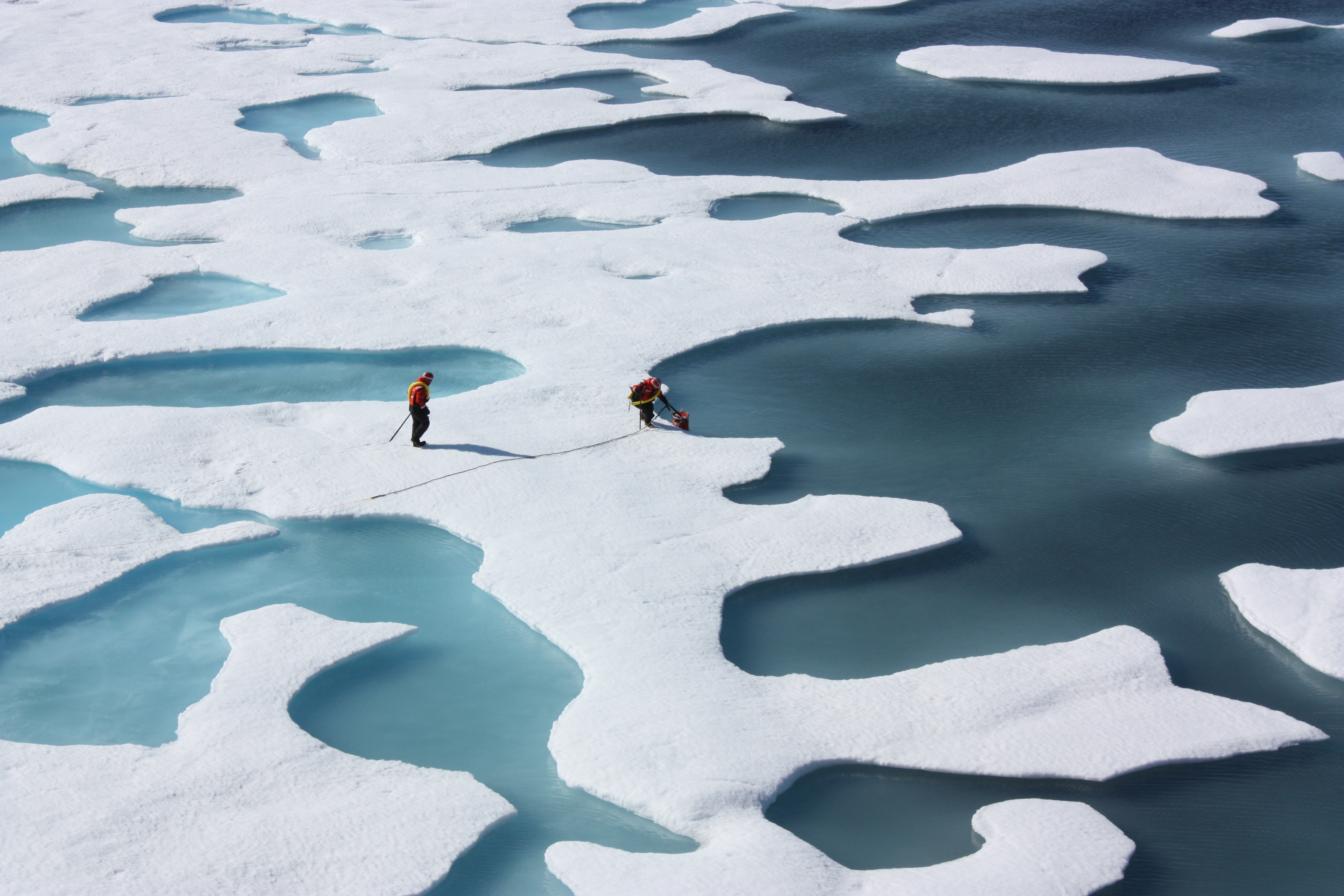
[[File:Ponds_on_the_Ocean,_ICESCAPE.jpg|360px|thumb|right|Figure 1. Arctic sea ice, shown above, is one component of the cryosphere.<ref>Wikimedia Commons. (September 26, 2015). ''Arctic Sea Ice Decline'' [Online]. Available: https://upload.wikimedia.org/wikipedia/commons/c/ca/Ponds_on_the_Ocean,_ICESCAPE.jpg</ref>]] | [[File:Ponds_on_the_Ocean,_ICESCAPE.jpg|360px|thumb|right|Figure 1. Arctic sea ice, shown above, is one component of the cryosphere.<ref>Wikimedia Commons. (September 26, 2015). ''Arctic Sea Ice Decline'' [Online]. Available: https://upload.wikimedia.org/wikipedia/commons/c/ca/Ponds_on_the_Ocean,_ICESCAPE.jpg</ref>]] | ||
<onlyinclude>The '''cryosphere''' is the component of the Earth that composed of all [[solid]], frozen [[water]] found on Earth. The cryosphere includes [[water storage]] areas such as [[glacier]]s, | <onlyinclude>The '''cryosphere''' is the component of the Earth that composed of all [[solid]], frozen [[water]] found on Earth. The cryosphere includes [[water storage]] areas such as [[glacier]]s, [[iceberg]]s, snow-covered areas, and sea ice.</onlyinclude><ref name="RE1">National Snow and Ice Data Center. (September 26, 2015). ''All About the Cryosphere'' [Online]. Available: http://nsidc.org/cryosphere/allaboutcryosphere.html</ref> | ||
The cryosphere expands and contracts over the course of | The cryosphere expands and contracts over the course of months as average [[temperature]]s across the globe fluctuate. In cold winter months, some of the [[liquid]] water from the [[hydrosphere]] freezes, expanding the cryosphere. Anywhere that snow falls and where soil, rivers, and lakes freeze is a location where the cryosphere can expand.<ref name="RE2"/> | ||
More broadly, ice and snow are the key components of the cryosphere. But they have a wide range of unique properties, see below. | |||
==Components== | ==Components== | ||
Ice and snow are the main part of any component of the cryosphere, but there is an extensive list of formations that make up the cryosphere. These include: | Ice and snow are the main part of any component of the cryosphere, but there is an extensive list of ''formations'' that make up the cryosphere. These include: | ||
'''Land-based Ice''': Land-based ice makes up the largest parts of the cryosphere. Occasionally, land-based or continental ice can flow from land to the sea. When this happens, you get shelf ice (see '''water-based ice''' below). Some components of this part of the cryosphere include:<ref name="RE2" /> | |||
* '''Continental ice sheets''': Large masses of ice on land in Greenland and Antarctica | |||
* '''Ice caps''' | |||
* '''Glaciers''': Glaciers are large masses of ice on land that have built up from many seasons of snowfall. Slowly, glaciers move downhill. Glaciers cover about 10% of the Earth's land area.<ref name="RE1" /><ref>NASA Earth Data (2026). (Accessed May 25, 2026). ''Glaciers/Ice Sheets'' [Online]. Available: https://www.earthdata.nasa.gov/topics/cryosphere/glaciers-ice-sheets</ref> They also act as a large place of water storage for fresh water. | |||
* '''Permafrost''': Frozen soil or rock wherein almost all of the water held within it has frozen. If the ground is frozen all year, it is called permafrost. | |||
'''Land-based Snow''': Snow is a form of [[precipitation]] that falls in solid crystals. Snow is found in places all over the world and is important for some plants and animals.<ref name="RE2" /> | |||
[[File:Ross Ice Shelf 1997.jpg|thumb|Figure 2. The Ross Ice Shelf, Ross Sea in Antarctica, 1997. Photograph from Nathaniel B. Palmer.<ref>Wikimedia Commons (1997). (Accessed May 25, 2026). ''Ross Ice Shelf 1997'' [Online]. Available: https://commons.wikimedia.org/wiki/File:Ross_Ice_Shelf_1997.jpg</ref>]] | |||
'''Water-based Ice''': This is frozen parts of otherwise liquid components of the hydrosphere. Much of the water-based ice around the world is around Antarctica and the Arctic. Components of this part of the cryosphere are:<ref name="RE2" /> | |||
* '''Icebergs''': These are chunks of ice floating in water that break off of glaciers and ice shelves. | |||
* '''Ice shelves''': Platforms of ice that form where ice sheets and glaciers move into oceans.<ref name="RE1" /> Figure 2 shows an ice shelf from Ross Sea, Antarctica. | |||
* '''Sea ice''': This is ice that forms in the ocean when water is cooled to temperatures below freezing. Sea ice is located primarily in Arctic and Antarctic Oceans. | |||
* '''Frozen rivers and lakes''' | |||
==Climate== | ==Climate== | ||
The cryosphere plays a significant role in determining the Earth's climate as a result of the [[albedo]] of the light-coloured ice and snow. The high albedo of the different components | The cryosphere plays a significant role in determining the Earth's climate as a result of the [[albedo]] of the light-coloured ice and snow. The high albedo of the different cryosphere components reflects a large majority of the incoming [[solar radiation]], helping to regulate the Earth's temperature by balancing [[Earth's energy budget]]. Since icy polar regions are extremely sensitive to any shifts in the [[climate]], the loss of ice and snow from the cryosphere causes a decrease in the area of white surfaces, leading less energy to be reflected and more to be absorbed.<ref name="RE2">NOAA. (September 27, 2015). ''What is the cryosphere?'' [Online]. Available: http://oceanservice.noaa.gov/facts/cryosphere.html</ref> This process warms the Earth even more. The melting of Arctic ice is especially concerning as it leads to a [[positive feedback]] cycle.<ref> HyperPhysics. (September 26, 2015). Albedo of the Earth [Online]. Available: http://hyperphysics.phy-astr.gsu.edu/hbase/phyopt/albedo.html</ref> | ||
The loss of ice in the cryosphere as a result of an increase in [[global surface temperature]] also has several damaging impacts on human life. The loss of ice in the cryosphere is detrimental | The loss of ice in the cryosphere as a result of an increase in [[global surface temperature]] also has several damaging impacts on human life. The loss of ice in the cryosphere is detrimental because this ice is composed of freshwater (as opposed to saltwater) and thus provides people worldwide with drinking water. People living in dry areas near mountains in places such as South America and South East Asia rely on the meltwater from glaciers and ice packs for drinking water. Additionally, many rivers that provide people with water are fed at least partially from melting ice. If the cryosphere is reduced too drastically, there will be significantly less meltwater as ice quantities are reduced and a large number of people will have a reduced supply of drinking water. Similarly, there are places in Asia and even in Europe that direct meltwater to irrigate their crops.<ref>National Snow and Ice Data Center. (October 17, 2015). ''Do Glaciers Effect People?'' [Online]. Available: http://nsidc.org/cryosphere/glaciers/questions/people.html</ref> | ||
== For Further Reading == | |||
* [[Hydrosphere]] | |||
* [[Water storage]] | |||
* [[Albedo]] | |||
* [[Precipitation]] | |||
* Or explore a [[Special:Random|random page]] | |||
==References== | ==References== | ||
{{reflist}} | {{reflist}}[[Category:Uploaded]] | ||
Latest revision as of 17:17, 4 June 2026

The cryosphere is the component of the Earth that composed of all solid, frozen water found on Earth. The cryosphere includes water storage areas such as glaciers, icebergs, snow-covered areas, and sea ice.[2]
The cryosphere expands and contracts over the course of months as average temperatures across the globe fluctuate. In cold winter months, some of the liquid water from the hydrosphere freezes, expanding the cryosphere. Anywhere that snow falls and where soil, rivers, and lakes freeze is a location where the cryosphere can expand.[3]
More broadly, ice and snow are the key components of the cryosphere. But they have a wide range of unique properties, see below.
Components
Ice and snow are the main part of any component of the cryosphere, but there is an extensive list of formations that make up the cryosphere. These include:
Land-based Ice: Land-based ice makes up the largest parts of the cryosphere. Occasionally, land-based or continental ice can flow from land to the sea. When this happens, you get shelf ice (see water-based ice below). Some components of this part of the cryosphere include:[3]
- Continental ice sheets: Large masses of ice on land in Greenland and Antarctica
- Ice caps
- Glaciers: Glaciers are large masses of ice on land that have built up from many seasons of snowfall. Slowly, glaciers move downhill. Glaciers cover about 10% of the Earth's land area.[2][4] They also act as a large place of water storage for fresh water.
- Permafrost: Frozen soil or rock wherein almost all of the water held within it has frozen. If the ground is frozen all year, it is called permafrost.
Land-based Snow: Snow is a form of precipitation that falls in solid crystals. Snow is found in places all over the world and is important for some plants and animals.[3]

Water-based Ice: This is frozen parts of otherwise liquid components of the hydrosphere. Much of the water-based ice around the world is around Antarctica and the Arctic. Components of this part of the cryosphere are:[3]
- Icebergs: These are chunks of ice floating in water that break off of glaciers and ice shelves.
- Ice shelves: Platforms of ice that form where ice sheets and glaciers move into oceans.[2] Figure 2 shows an ice shelf from Ross Sea, Antarctica.
- Sea ice: This is ice that forms in the ocean when water is cooled to temperatures below freezing. Sea ice is located primarily in Arctic and Antarctic Oceans.
- Frozen rivers and lakes
Climate
The cryosphere plays a significant role in determining the Earth's climate as a result of the albedo of the light-coloured ice and snow. The high albedo of the different cryosphere components reflects a large majority of the incoming solar radiation, helping to regulate the Earth's temperature by balancing Earth's energy budget. Since icy polar regions are extremely sensitive to any shifts in the climate, the loss of ice and snow from the cryosphere causes a decrease in the area of white surfaces, leading less energy to be reflected and more to be absorbed.[3] This process warms the Earth even more. The melting of Arctic ice is especially concerning as it leads to a positive feedback cycle.[6]
The loss of ice in the cryosphere as a result of an increase in global surface temperature also has several damaging impacts on human life. The loss of ice in the cryosphere is detrimental because this ice is composed of freshwater (as opposed to saltwater) and thus provides people worldwide with drinking water. People living in dry areas near mountains in places such as South America and South East Asia rely on the meltwater from glaciers and ice packs for drinking water. Additionally, many rivers that provide people with water are fed at least partially from melting ice. If the cryosphere is reduced too drastically, there will be significantly less meltwater as ice quantities are reduced and a large number of people will have a reduced supply of drinking water. Similarly, there are places in Asia and even in Europe that direct meltwater to irrigate their crops.[7]
For Further Reading
- Hydrosphere
- Water storage
- Albedo
- Precipitation
- Or explore a random page
References
- ↑ Wikimedia Commons. (September 26, 2015). Arctic Sea Ice Decline [Online]. Available: https://upload.wikimedia.org/wikipedia/commons/c/ca/Ponds_on_the_Ocean,_ICESCAPE.jpg
- ↑ 2.0 2.1 2.2 National Snow and Ice Data Center. (September 26, 2015). All About the Cryosphere [Online]. Available: http://nsidc.org/cryosphere/allaboutcryosphere.html
- ↑ 3.0 3.1 3.2 3.3 3.4 NOAA. (September 27, 2015). What is the cryosphere? [Online]. Available: http://oceanservice.noaa.gov/facts/cryosphere.html
- ↑ NASA Earth Data (2026). (Accessed May 25, 2026). Glaciers/Ice Sheets [Online]. Available: https://www.earthdata.nasa.gov/topics/cryosphere/glaciers-ice-sheets
- ↑ Wikimedia Commons (1997). (Accessed May 25, 2026). Ross Ice Shelf 1997 [Online]. Available: https://commons.wikimedia.org/wiki/File:Ross_Ice_Shelf_1997.jpg
- ↑ HyperPhysics. (September 26, 2015). Albedo of the Earth [Online]. Available: http://hyperphysics.phy-astr.gsu.edu/hbase/phyopt/albedo.html
- ↑ National Snow and Ice Data Center. (October 17, 2015). Do Glaciers Effect People? [Online]. Available: http://nsidc.org/cryosphere/glaciers/questions/people.html