
Hydrosphere: Difference between revisions
m 1 revision imported: From the summer |
energy>Jmdonev No edit summary |
||
| Line 1: | Line 1: | ||
[[Category:Done 2026-08-01]] | |||
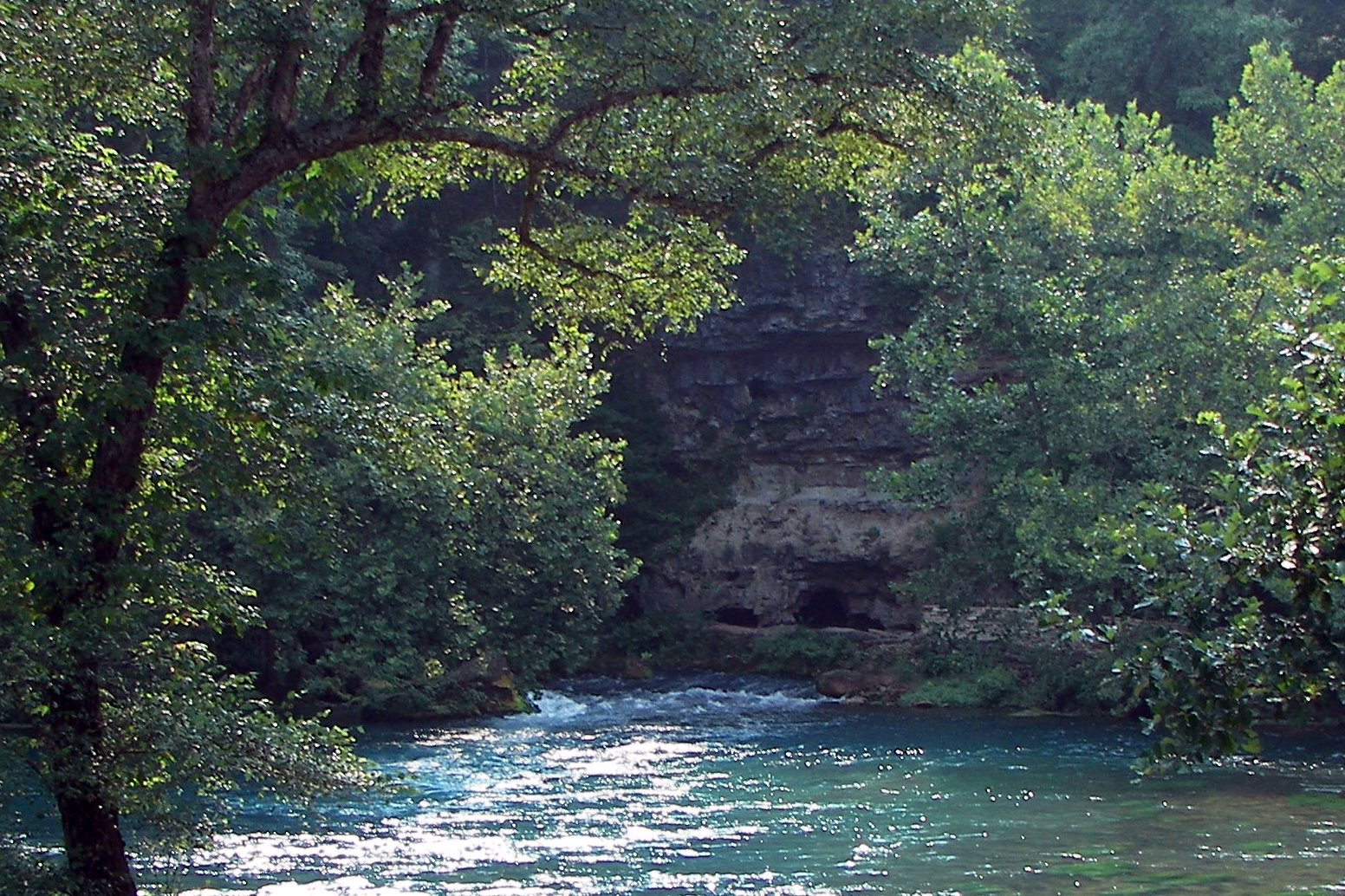
[[File:Big_Spring_Missouri_1-02Aug08.jpg|360px|thumb|right|Figure 1. The spring shown above would be considered part of the hydrosphere.<ref>Wikimedia Commons. (September 27, 2015). ''Big Spring'' [Online]. Available: https://upload.wikimedia.org/wikipedia/commons/0/07/Big_Spring_Missouri_1-02Aug08.jpg</ref>]] | [[File:Big_Spring_Missouri_1-02Aug08.jpg|360px|thumb|right|Figure 1. The spring shown above would be considered part of the hydrosphere.<ref>Wikimedia Commons. (September 27, 2015). ''Big Spring'' [Online]. Available: https://upload.wikimedia.org/wikipedia/commons/0/07/Big_Spring_Missouri_1-02Aug08.jpg</ref>]] | ||
<onlyinclude>The '''hydrosphere''' is the component of the Earth that is composed of all [[liquid]] [[water]] found on the planet. The hydrosphere includes [[water storage]] areas such as [[ocean]]s, seas, lakes, ponds, rivers, and streams.</onlyinclude> Overall, the hydrosphere is very large, with the oceans alone covering about 71% of the surface area of Earth.<ref name="RE1">RICE. (September 26, 2015. ''Hydrosphere'' [Online]. Available: http://earth.rice.edu/mtpe/hydro/hydrosphere/hydrosphere_what.html</ref><ref>Hawai'i Pacific University Ocean Institute. (November 2, 2015). ''Aqua Facts'' [Online]. Available: http://www.oceanicinstitute.org/aboutoceans/aquafacts.html</ref> | <onlyinclude>The '''hydrosphere''' is the component of the Earth that is composed of all [[liquid]] [[water]] found on the planet. The hydrosphere includes [[water storage]] areas such as [[ocean]]s, seas, lakes, ponds, rivers, and streams.</onlyinclude> Overall, the hydrosphere is very large, with the oceans alone covering about 71% of the surface area of Earth.<ref name="RE1">RICE. (September 26, 2015. ''Hydrosphere'' [Online]. Available: http://earth.rice.edu/mtpe/hydro/hydrosphere/hydrosphere_what.html</ref><ref>Hawai'i Pacific University Ocean Institute. (November 2, 2015). ''Aqua Facts'' [Online]. Available: http://www.oceanicinstitute.org/aboutoceans/aquafacts.html</ref> | ||
The motion of the hydrosphere and the exchange of water between the hydrosphere and [[cryosphere]] is the basis of the [[hydrologic cycle]]. The continuous movement and exchange of water helps to form currents that move warm water from the tropics to the poles and help regulate the [[temperature of the Earth]]. The exchanging of water is | The motion of the hydrosphere and the exchange of water between the hydrosphere and [[cryosphere]] is the basis of the [[hydrologic cycle]]. The continuous movement and exchange of water helps to form currents that move warm water from the tropics to the poles and help regulate the [[temperature of the Earth]]. The exchanging of water is therefore a vital part of the hydrosphere.<ref name="RE1"/> | ||
Please note that although the hydrosphere is ''primarily'' composed of water, there are also some "impurities" (or "additions") to this water. These "impurities" include dissolved minerals, dissolved [[gas]]es, and particulates. Some of these can be considered [[pollution]], while others are necessary for health of [[ecosystem]]s.<ref name="RE2">South Carolina State University. (September 27, 2015). ''Hydrosphere'' [Online]. Available: http://physics.scsu.edu/~psc152/F/F-Hydrosphere</ref> For example, too much [[sediment]] is harmful to the surrounding ecosystems, while insufficient levels of dissolved [[oxygen]] in the water lead to [[hypoxia|hypoxic conditions]] that can harm ecosystems. A delicate balance is needed for healthy ecosystems that surround different parts of the hydrosphere. | |||
==Components== | ==Components== | ||
[[File:Watercyclesummary.jpg|thumb|400px|right|Figure 2. This image summarizes the hydrosphere cycle<ref>Wikicommons. (July 22, 2016). ‘’Water Cycle’’ [Online]. Available: https://upload.wikimedia.org/wikipedia/commons/1/19/Watercyclesummary.jpg</ref>]] | [[File:Watercyclesummary.jpg|thumb|400px|right|Figure 2. This image summarizes the hydrosphere cycle<ref>Wikicommons. (July 22, 2016). ‘’Water Cycle’’ [Online]. Available: https://upload.wikimedia.org/wikipedia/commons/1/19/Watercyclesummary.jpg</ref>]] | ||
Any water storage area on the Earth that holds liquid water is considered to be a part of the hydrosphere. Because of this, there is an extensive list of formations that make up the hydrosphere. These include:<ref name="RE2"/> | Any ''water storage area'' on the Earth that holds liquid water is considered to be a part of the hydrosphere. Because of this, there is an extensive list of formations that make up the hydrosphere. These include:<ref name="RE2"/> | ||
* '''Oceans''': Most of the water on the planet Earth is salt water, and the vast majority of this salt water is held in the oceans. | * '''Oceans''': Most of the water on the planet Earth is salt water, and the vast majority of this salt water is held in the oceans. | ||
* '''Fresh water''': Fresh water is much less abundant than salt water, and is held in a variety of different places. | * '''Fresh water''': Fresh water is much less abundant than salt water, and is held in a variety of different places. | ||
| Line 20: | Line 19: | ||
==Human Impacts on Hydrosphere== | ==Human Impacts on Hydrosphere== | ||
In recent history humans have drastically changed the hydrosphere. Water pollution, river [[hydroelectric dam|damming]], wetland drainage, [[climate change]], and irrigation have all changed the hydrosphere. [[Eutrophication]] caused by the release of fertilizers and sewage into water storage areas has caused aquatic environments to be artificially enriched with nutrients. The excessive algal blooms can result in harmful hypoxic conditions in the water. Acid rain | In recent history, humans have drastically changed the hydrosphere. Water pollution, river [[hydroelectric dam|damming]], wetland drainage, [[climate change]], and irrigation have all changed the hydrosphere. [[Eutrophication]] caused by the release of fertilizers and sewage into water storage areas has caused aquatic environments to be artificially enriched with nutrients. The excessive algal blooms can result in harmful hypoxic conditions in the water. Acid rain caused by [[SOx]] and [[NOx]] [[emission]]s from [[fossil fuel]] [[combustion]] has resulted in the acidification of components of the hydrosphere, harming surrounding ecosystems.<ref name="RE3">Global Climate Change. (September 27, 2015). ''The Hydrosphere'' [Online]. Available: https://sites.google.com/site/gccclimatechange/the-different-spheres/the-hydrosphere</ref> | ||
Finally, | Finally, humans change the natural flow of water in the hydrosphere by diverting and damming rivers. Changing this natural flow harms surrounding ecosystems that rely on the water source. This can also result in some aquatic areas drying out and excessive amounts of sediment entering streams and rivers.<ref name="RE3"/> | ||
==Climate== | ==Climate== | ||
The properties and motion of the hydrosphere are important in maintaining the diverse [[climate]]s that exist worldwide. The ocean | The properties and motion of the hydrosphere are important in maintaining the diverse [[climate]]s that exist worldwide. The ocean (which holds 97% of the water on Earth) is especially important to the climate system. The ocean itself serves as a reservoir which contributes to how much [[solar radiation]] is absorbed. Since the ocean is so vast, it absorbs a large amount of [[energy]] from the [[Sun]]. As well, the ocean is important to the climate system as it limits how fast the climate can change. [[Water]] naturally has a temperature regulating property because of its high [[specific heat capacity]]. Additionally, the ocean serves to redistribute energy and [[heat]] around the globe, contributing to the different average [[temperature]]s that exist over the globe.<ref name="RE1"/> | ||
== For Further Reading == | |||
* [[Water]] | |||
* [[Water storage]] | |||
* [[Hydrologic cycle]] | |||
* [[Climate system]] | |||
* Or explore a [[Special:Random|random page]] | |||
==References== | ==References== | ||
{{reflist}} | {{reflist}} | ||
[[Category: Uploaded]] | |||
Revision as of 23:13, 13 July 2026

The hydrosphere is the component of the Earth that is composed of all liquid water found on the planet. The hydrosphere includes water storage areas such as oceans, seas, lakes, ponds, rivers, and streams. Overall, the hydrosphere is very large, with the oceans alone covering about 71% of the surface area of Earth.[2][3]
The motion of the hydrosphere and the exchange of water between the hydrosphere and cryosphere is the basis of the hydrologic cycle. The continuous movement and exchange of water helps to form currents that move warm water from the tropics to the poles and help regulate the temperature of the Earth. The exchanging of water is therefore a vital part of the hydrosphere.[2]
Please note that although the hydrosphere is primarily composed of water, there are also some "impurities" (or "additions") to this water. These "impurities" include dissolved minerals, dissolved gases, and particulates. Some of these can be considered pollution, while others are necessary for health of ecosystems.[4] For example, too much sediment is harmful to the surrounding ecosystems, while insufficient levels of dissolved oxygen in the water lead to hypoxic conditions that can harm ecosystems. A delicate balance is needed for healthy ecosystems that surround different parts of the hydrosphere.
Components

Any water storage area on the Earth that holds liquid water is considered to be a part of the hydrosphere. Because of this, there is an extensive list of formations that make up the hydrosphere. These include:[4]
- Oceans: Most of the water on the planet Earth is salt water, and the vast majority of this salt water is held in the oceans.
- Fresh water: Fresh water is much less abundant than salt water, and is held in a variety of different places.
- Surface water: Surface sources of freshwater include lakes, rivers, and streams.
- Ground water: Fresh water held beneath ground makes up a small portion of the fresh water on Earth.
- Glacial water: Water that melts off of glaciers.
- Atmospheric water vapour
Human Impacts on Hydrosphere
In recent history, humans have drastically changed the hydrosphere. Water pollution, river damming, wetland drainage, climate change, and irrigation have all changed the hydrosphere. Eutrophication caused by the release of fertilizers and sewage into water storage areas has caused aquatic environments to be artificially enriched with nutrients. The excessive algal blooms can result in harmful hypoxic conditions in the water. Acid rain caused by SOx and NOx emissions from fossil fuel combustion has resulted in the acidification of components of the hydrosphere, harming surrounding ecosystems.[6]
Finally, humans change the natural flow of water in the hydrosphere by diverting and damming rivers. Changing this natural flow harms surrounding ecosystems that rely on the water source. This can also result in some aquatic areas drying out and excessive amounts of sediment entering streams and rivers.[6]
Climate
The properties and motion of the hydrosphere are important in maintaining the diverse climates that exist worldwide. The ocean (which holds 97% of the water on Earth) is especially important to the climate system. The ocean itself serves as a reservoir which contributes to how much solar radiation is absorbed. Since the ocean is so vast, it absorbs a large amount of energy from the Sun. As well, the ocean is important to the climate system as it limits how fast the climate can change. Water naturally has a temperature regulating property because of its high specific heat capacity. Additionally, the ocean serves to redistribute energy and heat around the globe, contributing to the different average temperatures that exist over the globe.[2]
For Further Reading
- Water
- Water storage
- Hydrologic cycle
- Climate system
- Or explore a random page
References
- ↑ Wikimedia Commons. (September 27, 2015). Big Spring [Online]. Available: https://upload.wikimedia.org/wikipedia/commons/0/07/Big_Spring_Missouri_1-02Aug08.jpg
- ↑ 2.0 2.1 2.2 RICE. (September 26, 2015. Hydrosphere [Online]. Available: http://earth.rice.edu/mtpe/hydro/hydrosphere/hydrosphere_what.html
- ↑ Hawai'i Pacific University Ocean Institute. (November 2, 2015). Aqua Facts [Online]. Available: http://www.oceanicinstitute.org/aboutoceans/aquafacts.html
- ↑ 4.0 4.1 South Carolina State University. (September 27, 2015). Hydrosphere [Online]. Available: http://physics.scsu.edu/~psc152/F/F-Hydrosphere
- ↑ Wikicommons. (July 22, 2016). ‘’Water Cycle’’ [Online]. Available: https://upload.wikimedia.org/wikipedia/commons/1/19/Watercyclesummary.jpg
- ↑ 6.0 6.1 Global Climate Change. (September 27, 2015). The Hydrosphere [Online]. Available: https://sites.google.com/site/gccclimatechange/the-different-spheres/the-hydrosphere